
Mercury Lab Decontamination
Mercury lab decontamination and heavy metal cleanup address spills, hidden residues and contaminated equipment. We assess the affected areas, plan the removal and verify the results against the criteria agreed for your site.
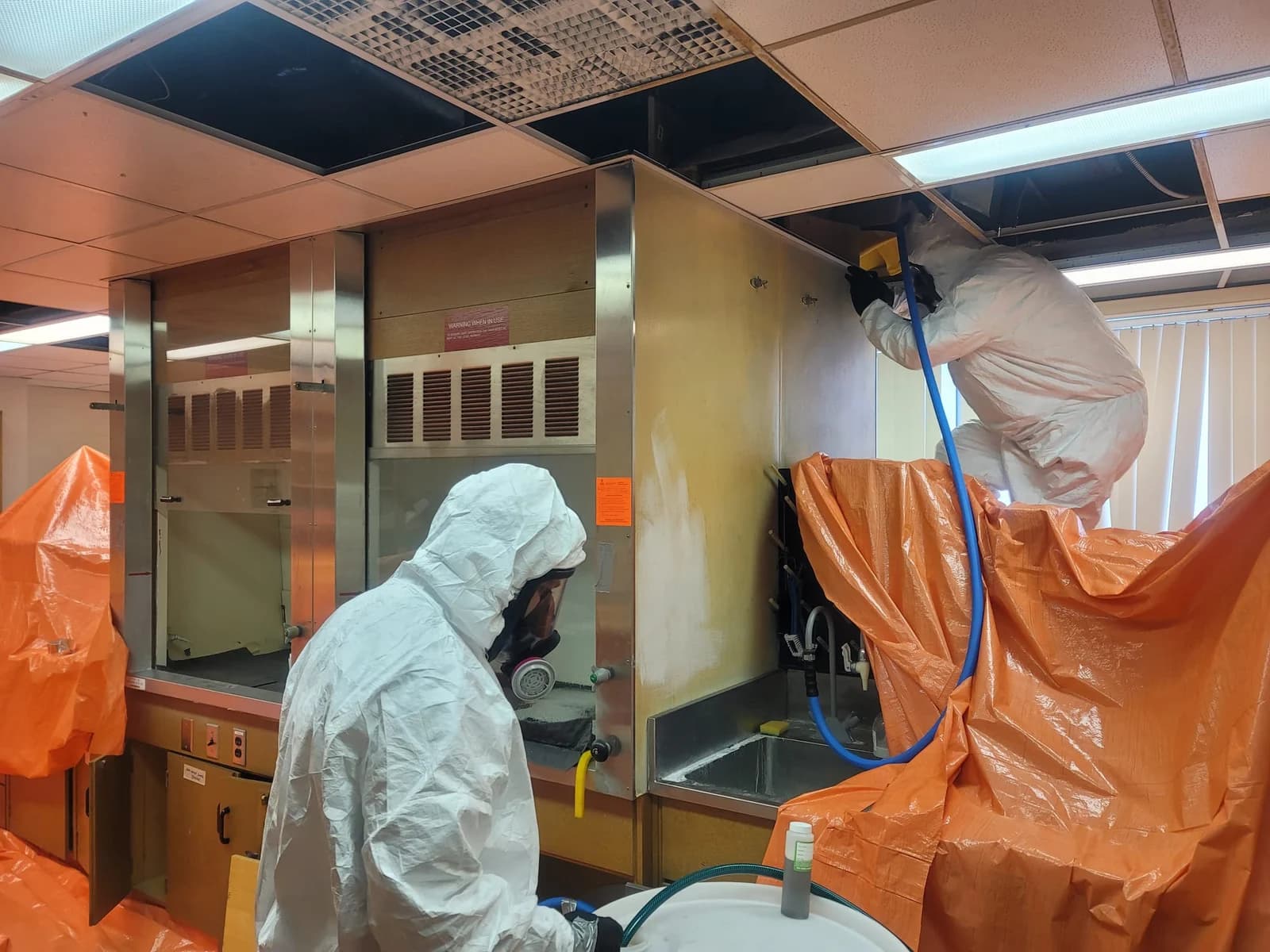
Heavy Metal Laboratory Cleanup
Heavy metal laboratory cleanup can cover benches, cabinetry, fume hoods and equipment. The contaminants identified determine whether the work needs surface sampling, source removal, vapor assessment or a combination of checks.
Mercury lab decontamination starts with the spill or equipment history and the areas that may have been affected. Small droplets can reach cabinet joints, floor cracks and equipment components. A targeted survey helps locate sources and define the cleanup rather than relying on visible surface condition.
Mercury Vapor Abatement for Lab Benches
Mercury vapor abatement for lab benches and cabinetry focuses on locating and removing the source. Vapor surveys can identify contamination beyond the visible spill area. Final measurements are reviewed against the agreed criteria for the room and its intended use.
Cornell EHS notes that mercury may be hidden inside equipment components and recommends addressing it before storage, transport or disposal. Cornell mercury equipment guidance (opens in a new tab).
Elemental Mercury Spill Service for Labs
An elemental mercury spill service for a lab begins with a site-specific assessment. Share the location, affected equipment and any response already taken so the containment, survey and cleanup requirements can be established.
Lead Chemical Decontamination in Laboratories
Lead chemical decontamination in a laboratory needs a separate assessment of affected surfaces, materials and waste. The plan identifies suitable removal methods and verification sampling for the lead-containing residues found.
Hazardous Waste Records & Facility Clearance
The handover combines assessment findings, removal records and the specified vapor or surface results. Waste tracking documents cover the materials included in the disposal scope. Your EHS team can use these records to review the completed work and any remaining restrictions.
- Contamination survey and affected-area records
- Specified vapor and surface test results
- Cleanup records and follow-up findings
- Applicable waste manifests and chain of custody
Mercury and heavy metals questions
Need a more specific answer?
Talk to our team
How do professionals clean up a laboratory mercury spill?
Professionals assess the spill area, locate mercury sources, recover contamination with suitable equipment and collect affected materials for disposal. Vapor measurements help identify remaining sources and check the result. Cracks, porous surfaces and equipment interiors can extend the cleanup beyond the visible spill.
What must you never do when cleaning up a mercury spill?
Do not use an ordinary vacuum, broom or drain to collect mercury. These actions can spread contamination. Restrict access and follow your laboratory's spill response procedures while qualified help assesses the situation.
How long can mercury vapor remain after a spill?
There is no single clearance time. Mercury left in cracks or equipment can remain a source of vapor. Source removal and appropriate measurements, rather than elapsed time or appearance, inform the clearance decision.
How is hidden mercury detected in laboratory cabinetry and equipment?
A mercury vapor analyzer measures airborne mercury near suspected sources, including cabinet joints, floor cracks and equipment components. Readings guide further investigation. Surface sampling may also be needed, depending on the contamination and the clearance decision.
How is mercury spill waste disposed of?
Mercury and contaminated cleanup materials need suitable collection, packaging and an approved disposal route. Waste classification and location determine the applicable requirements. The agreed disposal scope identifies the tracking records provided.
What does mercury treatment do, and how is the result verified?
Treatment supports the removal or control of mercury contamination using methods appropriate to the site. It does not replace source identification. Verification may include vapor measurements and surface checks against agreed acceptance criteria.
How is lead or other heavy metal contamination assessed?
Chemical-use records identify which metals may be present. Inspection and targeted surface or material samples help define affected areas and the cleanup scope. Verification must address the specific metal; a mercury vapor survey cannot establish clearance for lead or other metal residues.
Request Mercury & Heavy Metal Decontamination
Describe the spill or historical contamination, affected equipment and site location so we can plan the survey.
Mercury and heavy metals